Loading...

EVs Continue to Gain Momentum as Consumer Demand Intensifies

by Melinda Zabritski 2 min read February 14, 2023

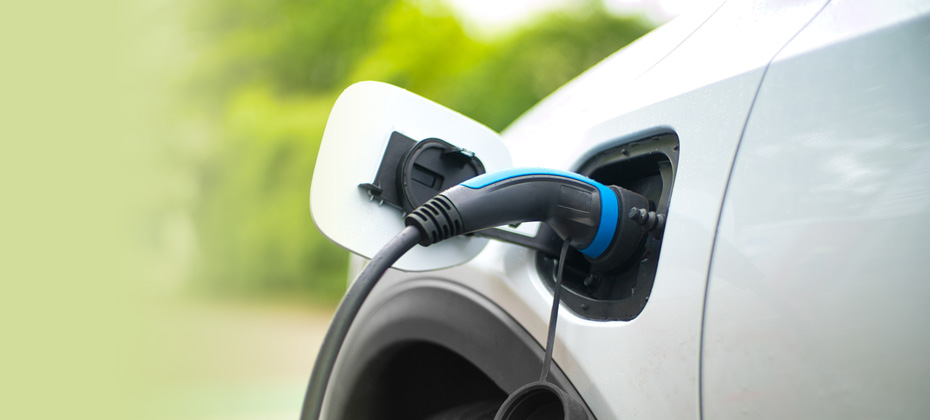
Electric vehicle charging

If there’s one thing this year’s NADA Show demonstrated, it’s that the industry is hyper-focused on electric vehicles (EVs). As new models are introduced to the market—with many more to come—and more states installing charging stations, it’s no surprise that EVs were top of mind.

To help the industry better understand the widespread growth, ahead of the show we compiled an Auto Finance Year-in-Review report to break down all things EV—from financing trends to vehicle segments and more.

In 2022, EVs comprised 5.32% of new vehicle financing, marking a notable increase compared to 3.09% in 2021, 1.69% in 2020, and 1.46% in 2019.

As EVs continue to build influence in the automotive industry, it’s important for professionals to understand trends that will enable them to plan for the future.

EV pricing is on the rise

Taking a deeper dive into the average price for both new and used EVs, the data continues to show the average loan amount is typically higher than other fuel types.

In 2022, the average loan amount for a new EV was $55,865, up from $48,190 in 2021. On the used side, the average loan amount increased from $41,482 to $53,367 year-over-year.

When comparing the average monthly payments between EVs and other fuel types—such as gasoline—there is a noteworthy difference. In 2022, the average monthly payment was $869 for a new EV and $792 for used. In comparison, the average monthly payment for a gasoline vehicle came in at $659 for new and $511 for used.

Banks lead in EV financing

While lenders navigate their way through the EV space, banks are currently leading in EV financing, despite other lenders such as credit unions offering longer terms for used EVs and lower interest rates for both new and used.

It’s important to note that banks comprised 27.32% of the total market share in vehicle financing in Q3 2022, just behind credit unions, who currently hold the largest share at 28.44%.

In 2022, credit unions offered notably lower rates for EVs, coming in at 3.49% for new and 4.48% for used. In comparison, banks offered 4.03% for new and 4.81% for used and captives were at 3.99% for new and 7.37% for used.

Though, banks had slightly longer terms for new EVs in 2022, credit unions had longer terms for used. Last year, banks gave consumers 68.65 months for new and 70.57 months for used and credit unions offered 68.61 months for new and 72.04 months for used. Meanwhile, captives had 64.91 months for new and 68.87 months for used.

While it’s no surprise credit unions are offering considerably lower rates and longer terms for used EVs—as they typically focus on the used vehicle space—it can be beneficial for all lenders to utilize this data in order to create more opportunities to gain additional market share as a whole.

As the EV market continues to grow, understanding the ongoing trends will enable automotive professionals to plan effectively and efficiently when assisting consumers in finding a vehicle that fits their lifestyle.

To learn more about current EV trends, view the full Auto Finance Year-in-Review presentation on demand.


Related Posts

  As vehicle prices and interest rates continue to evolve, both consumers and lenders are recalibrating their approaches to affordability and long-term sustainability. This shift has resulted in the subprime segment growing to its largest share of total finance market for subprime in the fourth quarter since 2021. According to Experian’s State of the Automotive Finance Market Report: Q4 2025, subprime borrowers accounted for 15.31% of total vehicle financing, an increase from 14.54% in Q4 2024. To understand why the subprime space is evolving, we took a deeper dive into the affordability picture and how changes in pricing and interest rates are influencing both consumer decisions and lender strategies. In Q4 2025, the average loan amount for a new vehicle increased $1,882 from the prior year to $43,582, and the average interest rate for a new vehicle went from 6.34% last year to 6.37% this quarter. As a result, the average monthly payment increased from $746 to $767 in the same time frame. On the used side, the average loan amount increased $872 year-over-year, reaching $27,528 in Q4 2025. However, despite the average interest rate declining from 11.63% to 11.26% during the same time, the average monthly payment grew $9 from last year to $537 this quarter. These changes are prompting thoughtful adjustments across the automotive ecosystem. Consumers are comparing financing options more carefully and adjusting loan terms when necessary to prioritize the cost of ownership. Lenders are also focusing more on payment flexibility and how long-term borrowers are performing as they leverage it for central pillars of strategies to stay ahead of the ever-evolving market. To learn more about automotive finance trends, view the full State of the Automotive Finance Market Report: Q4 2025 presentation on demand.

by Melinda Zabritski 2 min read March 5, 2026

From the vehicles we drive to the way we purchase them, everything in the automotive industry is evolving as new technologies, shifting incentives, and changing consumer expectations continue to develop. As electrified vehicles continue to grow their presence on the road, Experian’s Automotive Market Trends Report: Q3 2025 took a deep dive into this segment and found that 5.5 million electric vehicles (EVs) and 11.7 million hybrids were in operation this quarter. Furthermore, data through the third quarter of this year found that 73.8% of EV owners returning to market replaced their EV with another EV and only 16.5% switched to a gas-powered vehicle. The significant EV loyalty among consumers signals that the ownership experience is delivering on core expectations. While some owners continued to opt for an EV because they’ve grown accustomed to certain conveniences such as charging stations at home or workplace to avoid traditional fueling and the perks of lower maintenance needs, others took advantage of the EV tax credits before they expired at the end of September. However, as these motivations shift, it will be important to monitor how the EV market unfolds over the next six months. Notably, 11.7% of gas-powered vehicle owners replaced their vehicle with a gas-hybrid vehicle this quarter, suggesting that hybrids are acting as an effective bridge toward deeper electrification. In fact, drivers may see hybrids as the ‘happy medium’ vehicle that offers improved fuel efficiency without requiring full reliance on charging infrastructure. Why this matters for the aftermarket As the majority of consumers replace their EVs with another one and some switch their gas-powered vehicle for an electrified one, these trends signal potential long-term commitment to alternative fuel segments. This is important to monitor for aftermarket professionals as the EV service volume continues to grow, requiring different parts and technician training. With consumers increasingly turning to the aftermarket for cost-effective support, professionals who adapt to diverse powertrains will be best positioned to navigate this evolving wave of post-warranty demand. To learn more about EVs and other vehicle market trends, view the full Automotive Market Trends Report: Q3 2025 presentation on demand.

by John Howard 2 min read December 18, 2025

The pickup truck market is shifting gears, and hybrids are emerging as a driving force behind the change. As more drivers prioritize fuel efficiency while still expecting towing power, hybrid models are stepping in to redefine the segment. According to Experian’s Automotive Consumer Trends Report: Q3 2025, gas-hybrid and plug-in hybrid pickup trucks accounted for nearly one-in-five new light-duty trucks sold, coming in at 17.8% this quarter. This signals a major shift in a historically ICE-dominated category. Hybrids are likely gaining traction because they offer the best of both worlds. While their systems provide fuel efficiency by combining gas or diesel engines with electric motors to avoid range anxiety, they’re also meeting most towing and hauling requirements that accompany the traditional gas-powered trucks. Overall pickup truck market trends fueling hybrid growth When looking at the market from a broader perspective, there were 55.3 million light-duty trucks on U.S. roads in the third quarter of 2025, representing 20.10% of all vehicles in operation. Furthermore, as of Q3 2025, 34% of U.S. households with one-or-more vehicles also own a light-duty pickup truck, giving this segment a strong foothold in transportation options. The widespread presence underscores the pickup truck’s influence in the automotive industry as they set the pace for consumer expectations and steer market trends. The increased momentum for hybrid trucks can also help OEMs and dealers capitalize on growing their presence in an increasingly competitive space. It’s important for automotive professionals to consider aligning sales strategies with evolving buyer preference to elevate consumer engagement as this trend offers benefits today and even greater potential ahead. To learn more about pickup truck insights, view the full Automotive Consumer Trends Report: Q3 2025 presentation.

by Kirsten Von Busch 2 min read December 16, 2025

Subscribe to our Auto blog

Enter your name and email for the latest updates.

This site is protected by reCAPTCHA and the Google Privacy Policy and Terms of Service apply.